


This guide focuses on the nuances of hiring senior roles - the individuals who will define your technical debt, your scaling velocity, and ultimately, your product’s success.
TLDR:
- The "Vibe Check" is over. Soft skills are now a must-have. If an engineer can’t explain architectural trade-offs, they aren’t truly senior.
- AI has changed the game. Traditional LeetCode tests are outdated. Try pair programming or "Code Review" tests to see how engineers use today’s tools.
- Process matters: A 7-stage interview process will cost you top talent - four steps, maximum, is enough. Efficiency is now your biggest competitive edge.
- Global hiring is simple and easy. You can reach the top 10% of European talent in just 72 hours, so limiting your search to a 50-mile radius is a mistake.
What does a software developer interview look like?
There is no one-size-fits-all solution for the "perfect" interview. However, in 2026, the most successful companies have moved away from trick questions and toward assessments. The purpose of any interview is to gain a holistic understanding of the candidate's capabilities.
It all starts with soft skills. There’s a common but risky myth that developers don’t need them and can just "sit in a dark room and code,” and that’s simply not true. A senior engineer must be able to:
- Communicate complex ideas to non-technical stakeholders.
- Navigate conflict during a code review without ego.
- Mentor juniors to ensure the team’s collective IQ rises.
If they can’t communicate well in a wide range of scenarios, even the best coding skills won’t protect your project from the "silo" effect.
The 5 types of interview processes in 2026
Every company has its own way of technical vetting. Here’s how the main approaches compare in today’s market:
1. The Meeting Only
This approach is rare and usually only used for two extremes: very junior roles, where you hire for potential and attitude, or top managerial roles like CTO or VP of Engineering, where public track record and architectural "philosophy" matter most. While it helps build rapport, for most engineering roles, it doesn’t give enough proof of skill to avoid a bad hire.
2. The LeetCode/Algorithmic Marathon
This process has several rounds of data structure and algorithm puzzles. Big Tech companies like FAANG use it, but it’s not ideal for most. LeetCode tests what someone has memorized or "crammed" for. It checks if they know binary search trees, but not if they can build a scalable API or fix a production issue. It often selects "test-takers" instead of real problem-solvers.
3. The Live-Coding / Whiteboard Session
This is the classic "get on a call and code a sorting algorithm" method. It helps you see how someone thinks out loud and handles pressure. But it can cause "interview anxiety," so you might miss out on great engineers who don’t do well under stress. In 2026, live coding should focus on problem-solving, not memorizing syntax.
4. The Take-Home Assignment (Homework)
The candidate gets a project, like "Build a simple weather dashboard," and a few days to finish it. For interviewers, this is great - it shows how they document, test, and organize code. But for candidates, it’s a big request. Top senior engineers are usually already working and won’t spend 8 hours on a free assignment unless they’re really interested in your company.
5. The "All-Around"
This is a hybrid model that balances fairness with rigor. It typically includes:
- The culture/logic fit: A 30-minute screening to assess communication and "product mindset."
- The practical review: Instead of a long homework assignment, we might do a pair programming session or a code review, where the candidate reviews an existing (buggy) codebase and explains how to fix it.
- The meet-the-team: A relaxed hour where the candidate meets their future peers. This ensures the "human" element is solidified before any contract is signed.
Why the "Code Review" style is the best
We used to have Stack Overflow, and today we have AI agents writing code for us, and they (GitHub Copilot, Cursor) can generate boilerplate code in seconds. So the role of a senior engineer has shifted from writing code to reviewing and architecting code.
If you ask an engineer to write a basic function, they might just use an AI to do it. But if you ask them to review a complex PR or their own code, you are testing their true seniority. This "All-Around" approach checks competency, skills, and adaptability simultaneously.
What does the HighCircl interview look like?
Our specialty is senior+ roles, so we decided to create our own method. We believe that seniority isn’t just a number of years - it’s a mindset. When we talk about mindset, we specifically look for observable behaviors that show a growth-oriented approach, such as proactively seeking feedback and acting on it, taking ownership of mistakes and turning them into learning moments, and showing curiosity by exploring new tools or techniques to solve real problems. However, to maintain the highest standard, our primary filter is based on prior experience, requiring candidates to have at least 5 years of professional, high-impact experience.
Our four-step vetting process is thorough but respects a senior engineer’s time. We focus on how they solve problems in a fast-paced, remote setting.
1. Application Review
The first step is more than a keyword scan: we review every application by hand. We look for real ownership - did the developer just "work on" a feature, or did they lead big changes? We want to see stability and growth, especially from those who’ve moved from legacy systems to modern, AI-powered workflows. We also check for remote work experience.
2. Personality & Language Interview
Since HighCircl is a remote-first company, strong communication is a must. At this stage, we check more than just English skills - we look for a product mindset. Can the candidate explain technical trade-offs clearly, without jargon? How do they take feedback? We look for reliability, empathy, and humility. These traits help senior experts join your team quickly.
3. Take-home assignment
Candidates get up to eight hours to work on a project that mirrors real daily tasks. Since we work with seniors, we don’t look for basic syntax (AI can handle that, and candidates can use their favorite AI tools). We focus on high-level decision-making.
The project typically involves building a functional UI that handles data listing, complex search functionality, caching strategies, and robust API integrations. We evaluate:
- Architectural patterns: Is the code modular and scalable?
- Error handling: How does the app behave when things go wrong?
- Edge-case handling: Did they consider empty states, slow networks, or malformed data?
- Documentation: Can another engineer pick this up and understand the "why" behind the code?
4. Live-coding Interview
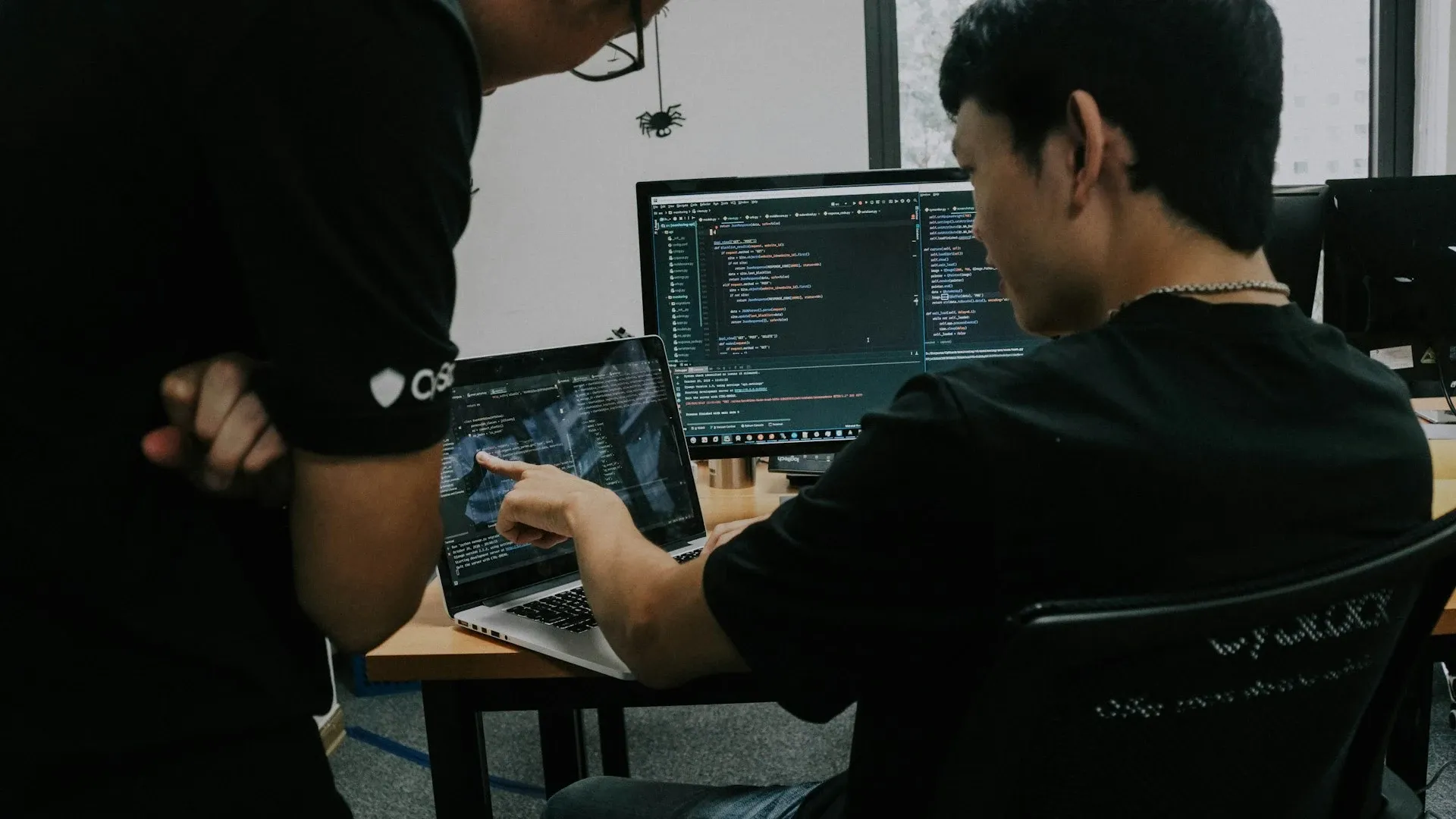
This is the heart of our process. Instead of a high-pressure whiteboard test, we perform a Code Review-style live session. The candidate "shows our technical interviewers around" the code they wrote for their take-home assignment.
We treat this as a collaborative pair-programming session. We ask them to explain their architectural choices and then - live on the call - we ask them to build an additional small feature or refactor a specific section. This shows us three things:
- Code ownership: Did they actually write the code, and do they understand it deeply?
- Adaptability: How quickly can they pivot when requirements change?
- Collaborative logic: Can they think out loud and work effectively with another senior peer?
Why we prioritize the remote-ready engineer
In the end, we want a mix of strong technical skills and top-notch communication. In a remote-first world, a developer who codes fast but communicates slowly can hold the team back.
We put an immense emphasis on communication because, in a distributed team, clarity is the only thing that scales. A HighCircl engineer isn't just a pair of hands; they are a remote-ready collaborator who understands that their job is to reduce friction for the rest of the team.
The stakes are high for a mis-hire
Team issues cause almost 25% of startup failures. When you hire a software engineer, you’re not just paying a salary - you’re investing in your product’s foundation. A senior mis-hire costs more than just the recruitment fee; it also costs you:
- Onboarding time: 2–4 weeks of your existing team’s productivity.
- Technical debt: Bad code written in month one that will take six months to "untangle."
- Cultural decay: One "brilliant jerk" can cause your best mid-level developers to quit.
According to our calculations, the average cost of a bad hire is over €150,000 when you factor in lost momentum and replacement costs.
How HighCircl helps hiring software engineers
At HighCircl, we admit we’re biased - we’ve seen the "old way" fail too often. We don’t believe in month-long searches and dumping 100s of CVs on clients. As a founder or CTO, your time is better spent interviewing the final three candidates, not the first three hundred.
Our engineer-led vetting process means that by the time a candidate reaches you, they’ve already passed a technical deep dive led by one of our own senior engineers. We don't just check if the code runs; we check if the architecture is built to last.
In just 72 hours, we give you a shortlist of the top 10% of vetted talent, so you can go from searching to scaling in under a week.
Frequently Asked Questions (FAQ)
Why are traditional coding tests less effective today?
Traditional coding tests often assess memorization and algorithm skills, but with AI tools able to generate code quickly, these tests no longer reflect real-world problem-solving or architectural ability. Modern hiring needs to assess how engineers use tools and approach business challenges.
How important are soft skills in senior engineering hires?
Soft skills are now essential. Senior engineers must communicate complex ideas, mentor others, and collaborate across teams, especially in remote and distributed environments.
What is the ideal number of interview stages?
Four steps or fewer is optimal. Long, multi-stage processes can drive away top talent, while efficient, focused vetting keeps candidates engaged and demonstrates respect for their time.
How does HighCircl’s process differ from traditional hiring?
HighCircl emphasizes a blend of technical review, practical assignments, and communication assessments, all streamlined into a fast, senior-friendly process. Every candidate is vetted by experienced engineers before reaching the client.
Why is remote-readiness so important now?
In a remote-first world, clear communication and self-management are as critical as technical skill. Remote-ready engineers reduce friction, accelerate onboarding, and help distributed teams perform at their best.