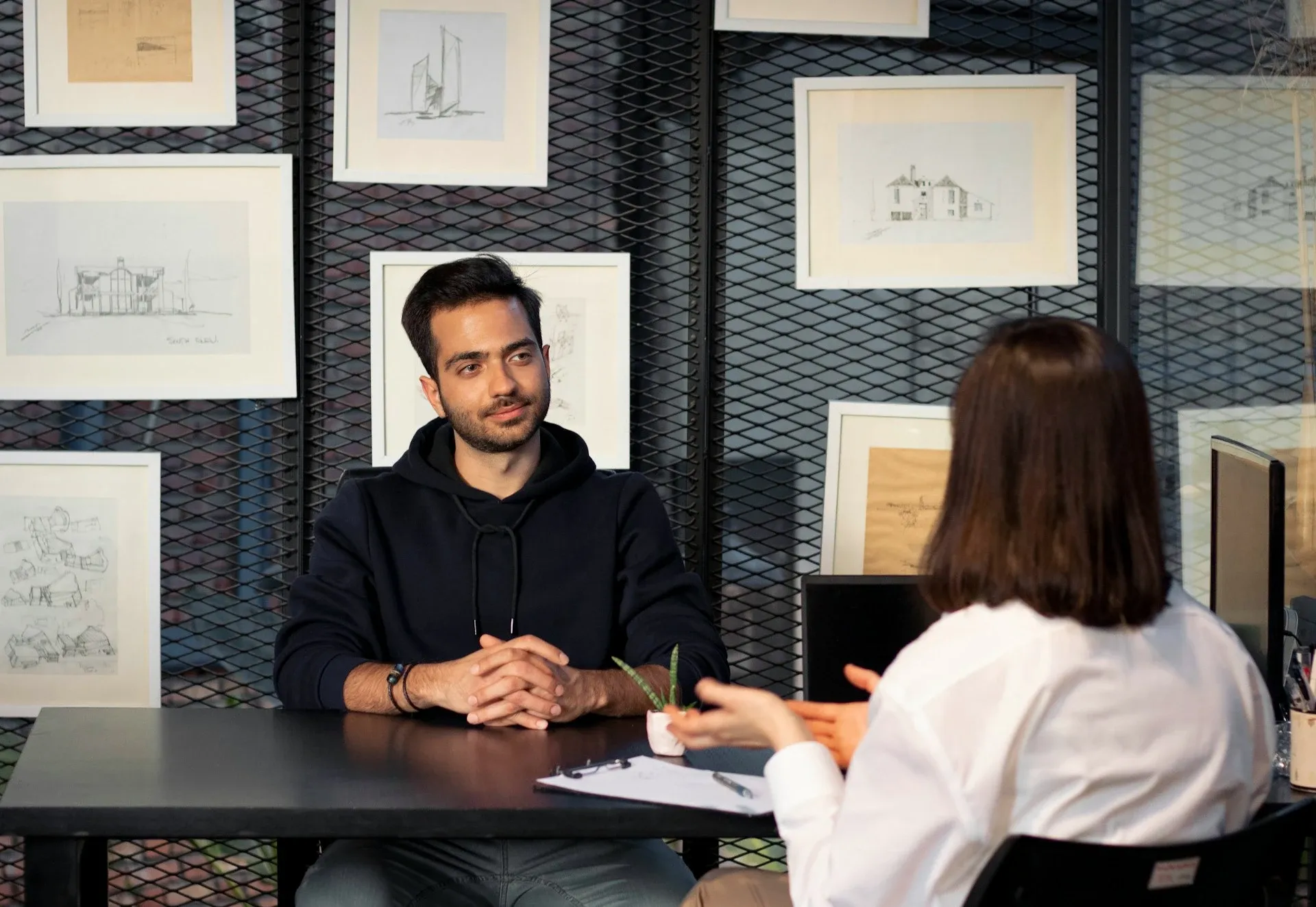


Your technical skills help you pass the first round, but the HR interview, also called the behavioral or personality round, is what really decides if you move forward. Many developers see this part as just a formality, but it is actually a key test of your communication, reliability, and how well you fit with the team. HR managers want someone who will be a great teammate, not just the best coder.
1. Do more than "search" the company
If you give generic answers like "I like your tech stack," HR will see it as a red flag. It makes it seem like you want any job, not this one. Before your interview, go deeper than just the homepage. Try to understand the company as a business, not just as a codebase.
What you should identify:
- The business model: How does the company actually make money? Understanding the difference between a B2B SaaS and a consumer-facing fintech app changes how you describe your work.
- The culture: Look for their engineering blog or core values. Do they focus on rapid deployment (move fast and break things) or on high security and high compliance stability?
- The "why": Why does this specific role exist now? Are they scaling a new product, stabilizing legacy code, or pivoting their architecture?
The goal: Be ready to explain how your career goals fit with where the company is headed. Being clear about this shows you are intentional, which is what sets senior engineers apart from juniors.
2. Transition from "what" to "how": the storytelling shift
The HR manager already has your resume. Listing your tech stack again is a missed chance. This interview is about the stories and impact behind your experience.
Mastering the S.T.A.R. Method
To give strong answers, use the STAR method. This approach keeps you focused and helps you highlight results, which is what HR cares about most.
- S (Situation): Briefly set the scene. Example: Our main database was experiencing a 30-second delay during peak hours.
- T (Task): What was your specific responsibility? Example: I was tasked with identifying the bottleneck and implementing a caching layer.
- A (Action): What did you do? Focus on your individual contribution, not just the team. Example: I audited our SQL queries and introduced Redis for often-accessed metadata.
- R (Result): What was the business outcome? Use numbers if possible. Example: Latency dropped to 200ms, and we reduced server costs by 15 percent.
Top candidates say what they did, explain how they make decisions, and show how they help the team beyond writing code.
3. Master the art of "technical translation"
In today’s remote work environment, communication is more important than ever. During the HR interview, they want to see if you can explain complex ideas to people who aren’t technical, like Product Managers or clients.
Focus on these three pillars:
- Clarity of thought: Can you explain a complex project in three sentences without using jargon?
- Active listening: Don’t just wait for your turn to talk. Repeat back what the recruiter said to show you understand the challenges of the role.
- Professional tone: Show that you’re someone the company can trust to meet with clients or the CEO.
Remember, you don’t need perfect vocabulary, but you do need to show that your soft skills won’t hold the team back.
4. Treat the interview as a "reverse evaluation"
Experienced professionals don’t just accept any offer; they look for the right fit. Asking smart, thoughtful questions shows you’re a strong candidate who cares about where you work.
High-value questions to ask HR:
- How does the engineering team balance technical debt with the pressure to deliver new features? This shows you care about code quality.
- What does the feedback loop look like between the product team and the developers? This shows you value collaboration.
- How has the company culture evolved as the team has grown? This shows you are interested in the long term.
- What distinguishes a "good" engineer from a "great" one within your specific culture? This shows ambition.
These questions show you’re engaged and aware of your own professional goals.
5. Focus on reliability and "culture add"
Many candidates talk about "culture fit," but it's actually more valuable to show how you can be a "culture add." Culture fit means mirroring the current team, but culture add is about bringing new perspectives, backgrounds, or strengths that help the company grow and innovate. Highlighting your unique qualities not only shows maturity and reliability, but it also demonstrates that you'll enrich the team in ways beyond simply fitting in.
To demonstrate this, emphasize:
- Ownership: Mention your processes for meeting deadlines and handling shifting priorities.
- Self-awareness: Be honest about where you can grow. A senior developer who says they have no weaknesses is risky, but someone who knows their limits and works to improve is valuable.
- Conflict resolution: Be ready to talk about a technical disagreement you had with a teammate and how you handled it professionally, without letting ego take over.
Handling common HR "curveball" questions
Self-assessment checkpoint: Before the interview, ask yourself a few quick reflective questions to surface meaningful stories you can share.
For example: "When did I last resolve conflict constructively?" or "What lesson did I learn from a recent project setback?" Taking a moment for self-reflection helps you prepare concrete, authentic examples instead of scrambling for answers on the spot.
Addressing career gaps and job hopping
Many talented engineers worry about gaps in their resumes. HR professionals in 2026 are increasingly understanding of "career breaks" for personal growth, family, or travel, as long as they are handled transparently.
- Be direct: "I took six months off to focus on family and used the time to upskill in Rust and Kubernetes."
- Focus on the present: Bring the conversation back to why you’re ready and excited to return to a full-time job now.
A quick follow up
After the interview, send a brief thank-you note to express your appreciation and reinforce your interest in the position. Keep your message polite and concise, and let the interviewer know you’re happy to provide any additional information if needed.
Conclusion: stand out beyond the code
In summary, the HR interview reveals who you are beyond code. It’s about being clear, communicating well, showing intention, and acting with maturity. If you prepare by learning about the business, explaining your experience with the STAR method, and showing you’re a strategic partner - not just someone who completes tasks - you’ll stand out as a top engineer.
When you master these non-technical skills, you make sure your technical abilities get noticed in the final rounds.